

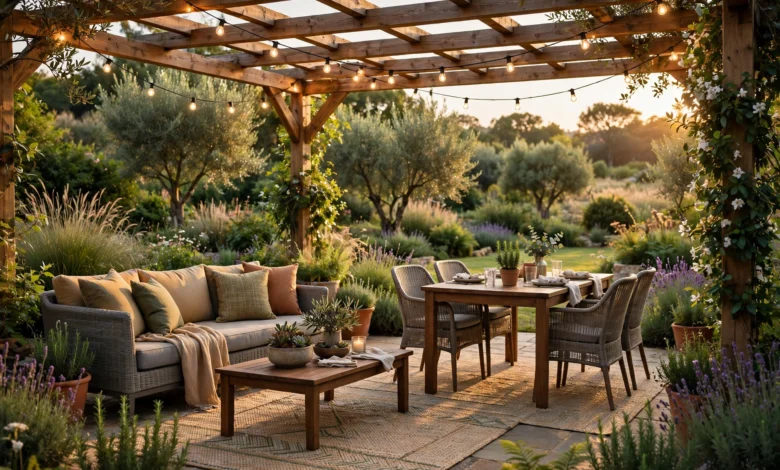
The secret to garden furniture that gets used daily is zoning: arrange your yard as a series of outdoor rooms — one for dining, one for lounging, one quiet corner — and choose weather-honest materials for each. Get those two decisions right and your garden furniture stops being seasonal decoration and becomes a second living room. This guide walks you through planning, materials, shade, lighting and storage, step by step.
Key takeaways
- Zone the yard like a floor plan: dining, lounging and a quiet corner each need their own footprint and furniture scale.
- Material choice decides maintenance: teak, aluminium and synthetic rattan-look weaves survive weather in different ways.
- Shade and lighting extend usable hours more than any single furniture purchase.
- Storage planned from day one keeps cushions and pieces alive for years.
- Interest is surging: searches for garden furniture run about 8,100 a month, up 160 percent year over year.
Why is garden furniture suddenly everywhere?
Because the indoor-outdoor living trend keeps growing: people are furnishing yards with the same care they give living rooms. Search data from Rising Trends (October 2026) puts garden furniture at roughly 8,100 searches a month, up 160 percent year over year, and design platforms report saves for “house with garden” imagery climbing massively. The yard is no longer leftover space; it is square metres you already pay for.
That shift changes what to buy. Occasional folding chairs suit occasional use. A second living room needs anchored zones, comfortable seating depths, surfaces at the right heights and light after sunset — the same design thinking you would apply indoors, translated for weather.

How do you zone a yard like a floor plan?
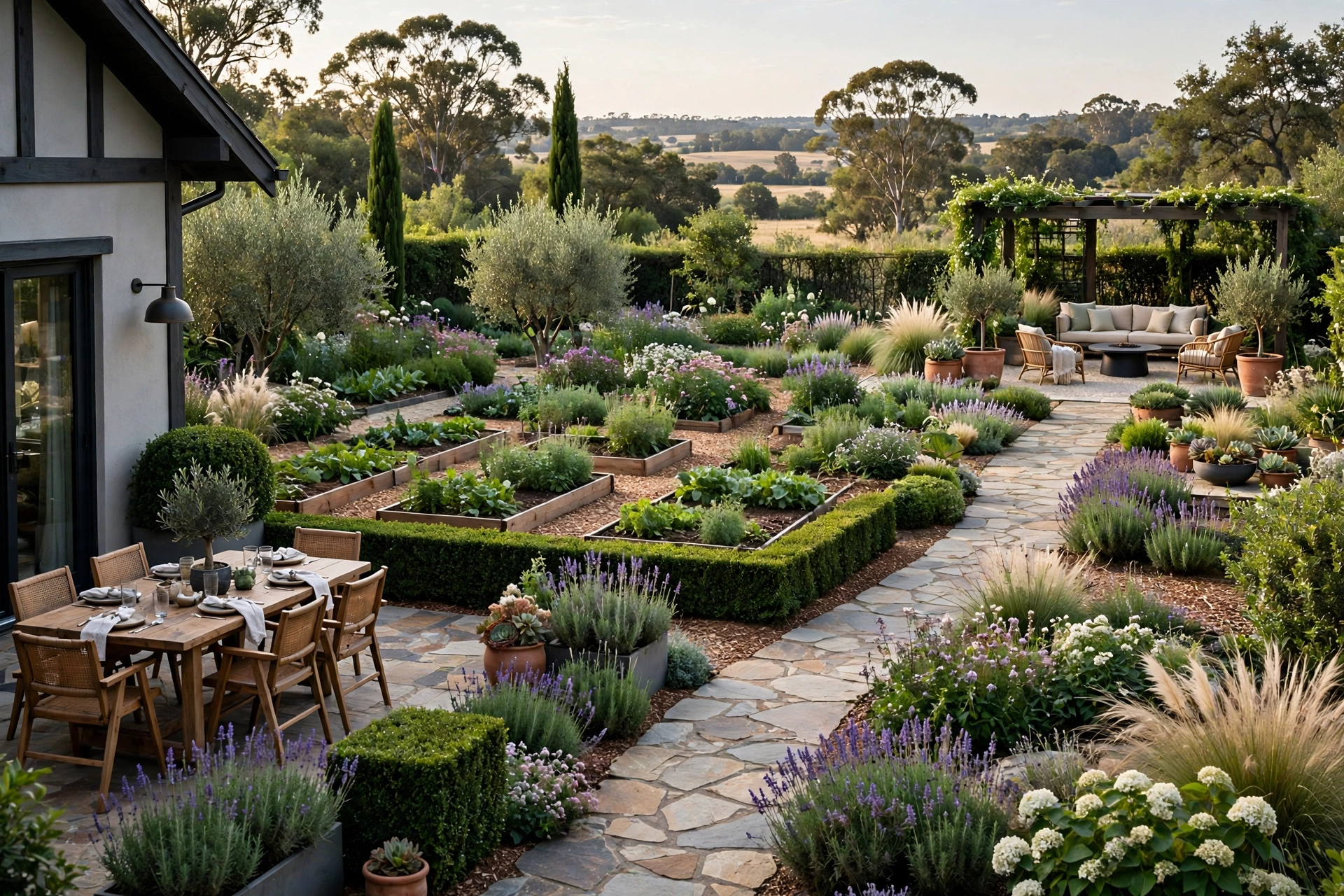
Walk the yard and assign each area a job before you buy anything. Dining wants level ground near the kitchen door. Lounging wants the best view and the longest sun or deepest shade, depending on your climate. A quiet corner wants distance from both. Zones fail when furniture is scattered decoratively instead of grouped functionally.
Plan your zones in this order
- Measure the yard and sketch it roughly to scale, marking doors, paths, trees and the sun’s path.
- Place the dining zone first, on the flattest ground closest to the kitchen.
- Place the lounge zone where you naturally want to sit at the day’s best hour.
- Reserve one small corner for a single chair, a bench or a hammock — the retreat zone.
- Draw the walking paths between zones and keep them clear of furniture legs and planters.
- Size each furniture group to its zone, leaving at least a comfortable passage around it.
For planting structure and water features that give zones their character, borrow freely from our Japanese zen garden design guide, whose layouts translate directly from screen to soil. Browsing real finished gardens on Houzz before you buy also sharpens your eye for proportions that work at your yard’s size.
Which materials survive real weather?
Choose materials by the maintenance you will honestly do, not the maintenance you promise yourself in spring. Teak weathers to silver and asks little. Aluminium never rusts and moves easily. Synthetic rattan-look weaves give the natural look without the natural fragility. The table below compares the honest trade-offs.
| Material | Weather behaviour | Maintenance | Best for |
|---|---|---|---|
| Teak | Extremely durable; silvers gracefully if left untreated | Optional oiling to keep the honey colour; otherwise wash yearly | Permanent dining sets and benches |
| Powder-coated aluminium | Cannot rust; light enough to move with the sun | Wipe down; check coating chips | Loungers, movable chairs, coastal gardens |
| Synthetic rattan-look weave | UV-stable versions handle sun and rain well | Hose down; store cushions separately | Lounge sets and deep seating |
| Natural rattan / wicker | Degrades outdoors; mould and brittleness risk | Needs covered storage and dry conditions | Covered verandas only |
| Steel | Strong but rusts if the coating fails | Inspect and touch up coating yearly | Compact bistro sets |
| Outdoor fabrics (solution-dyed acrylic) | Fade- and mildew-resistant when quality is genuine | Brush off, wash covers, store dry in winter | Cushions and upholstered outdoor seating |
Whatever you choose, lift the fabric question early. Cushions decide comfort, and cheap foam in thin covers is the fastest route to a set that looks tired by August.
How do shade and lighting extend your hours outside?
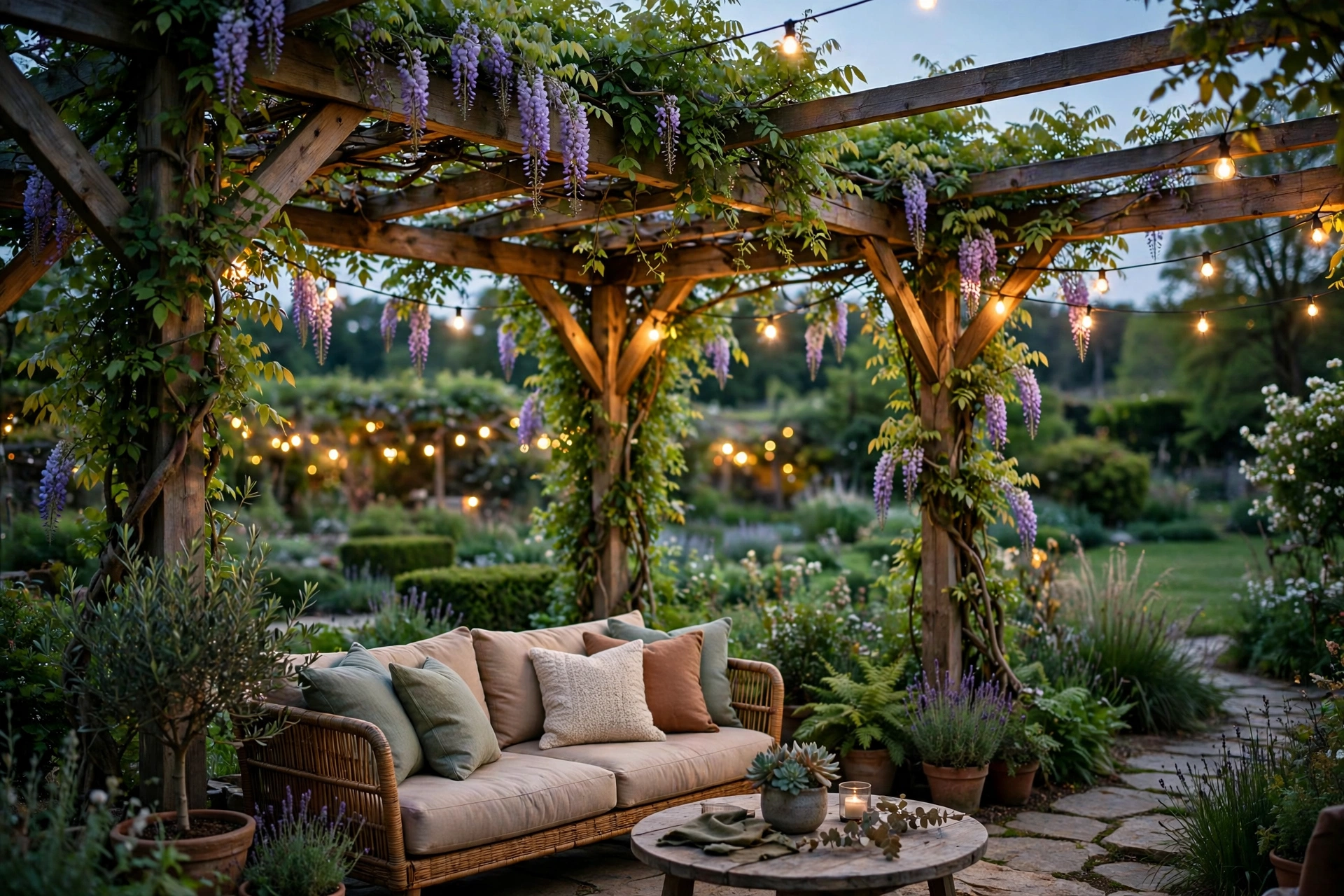
More than any furniture upgrade. A dining zone you cannot sit in at noon and cannot see at nine in the evening is a part-time room. Solve shade first with structure — a pergola, a sail or a well-placed tree — then add an umbrella for flexibility. Solve light in layers: a warm overhead source for dining, low path lighting for safety, and one accent light on a tree or water feature for depth.
Water deserves a mention here: even a small fountain changes how a garden feels after dark, and our roundup of modern water fountain designs shows the styles that suit compact yards. Keep electrical work to a qualified installer and choose fittings rated for outdoor use.
Before you start: what you need
- A measured sketch of the yard with doors, paths and sun exposure marked.
- An honest maintenance budget: the hours you will really give per season.
- A storage answer for cushions before the cushions arrive.
- Power access points identified if you plan lighting or a fountain.
How do you store it all without a garage full of regret?
Decide storage before the first delivery. Deck boxes double as side tables or extra seating in season and swallow cushions in winter. Stackable chairs earn their keep in small yards. Covers protect fixed pieces, but only breathable covers — sealed plastic traps moisture against fabric and frames.
- Measure your storage space and note its dimensions on your shopping list.
- Choose cushions that fit the deck box or indoor spot you actually have.
- Prefer stackable or folding secondary seating for guest overflow.
- Label cushion sets by zone so spring setup takes minutes, not a weekend.
- Clean and fully dry everything before winter storage to prevent mildew.
How do you furnish a small yard without crowding it?
Furnish fewer, better pieces at honest scale, and let every piece earn its footprint twice. Small yards fail when they are filled with miniature versions of big-garden furniture; they succeed when each zone gets one properly sized anchor and everything else folds, stacks or moves. Measure first, then buy the largest dining set your zone genuinely fits — undersized furniture looks lost and seats nobody comfortably.
Small-yard moves that work
- Choose one anchor per zone: a two-seat dining set, a single deep lounge chair, one bench.
- Prefer armless, open-frame designs that let sightlines pass through the garden.
- Use folding and stackable extras for guests instead of permanent overflow seating.
- Mount planters and lights on walls and fences to keep the floor clear.
- Let one surface do two jobs: a storage bench that seats, a deck box that serves as a table.
- Keep the palette tight so the eye reads calm, not clutter.
Scale discipline is the same skill indoors and out. A small yard with one generous chair you love beats a crowded set you navigate like an obstacle course, every single day of the season.
What about balconies and terraces?
The zoning logic still applies, compressed. A balcony usually holds one zone done well: either a two-person dining spot or a reading corner, not both squeezed. Rail planters, a folding table and one comfortable chair outperform a matching set that leaves no room to sit down.
Renting, or moving soon? Keep it movable
If your home is temporary, weight every decision toward pieces that move well. Aluminium frames, folding dining sets and cushion storage that doubles as a coffee table all survive a change of address. Avoid built-in benches and fixed pergolas unless your landlord agrees in writing, and photograph the garden as you found it. The zoning method still applies in full — you simply execute it with furniture that packs onto a van in one trip, ready to become a second living room somewhere new.
Common mistakes
- Buying pieces before zoning. Beautiful furniture in the wrong place still goes unused. Plan rooms first, shop second.
- Choosing natural rattan for open weather. It belongs under cover; outdoors it ages in months, not years.
- Ignoring cushion storage. Cushions left out all winter rarely survive to a second summer.
- Undersizing the dining set. Allow elbow room per diner and space to push chairs back, or meals migrate indoors.
- Lighting as an afterthought. One harsh floodlight kills atmosphere; layered warm light is what makes evenings work.
- Forgetting the path. Furniture that blocks the natural walking line gets cursed daily and moved eventually — usually somewhere worse.
Frequently asked questions
What is the lowest-maintenance garden furniture material?
Powder-coated aluminium, closely followed by teak left to silver. Aluminium needs only washing and never rusts, while teak needs nothing at all if you accept its grey patina. Both outlast cheaper options by years.
Can I leave synthetic rattan furniture out all year?
The frames and weave of quality UV-stable sets can stay out, but cushions should not. Store cushions dry indoors or in a deck box, and cover the frames in harsh winters to extend their life.
How much space does an outdoor dining zone need?
Plan for the table plus roughly a metre on all sides for chairs to slide back and people to pass behind seated diners. Squeezing this is the most common reason dining zones disappoint.
Is teak worth it compared with cheaper woods?
For permanent pieces, usually yes. Teak’s natural oils make it uniquely weather-resistant, so it survives decades with minimal care. Cheaper woods need sealing, covering and earlier replacement.
Where should I start with a small budget?
Start with the lounge zone: two comfortable chairs, a side table, shade and one light source. A small zone done properly gets used daily, while a large zone done cheaply gets used rarely.
Keep learning: planning the yard on screen first prevents expensive layout mistakes — our guide to exterior 3D scenes for gardens and patios shows how designers test outdoor layouts before buying.
Conclusion
Zone first, choose weather-honest materials, solve shade and light, and plan storage before delivery. Do those four things and garden furniture becomes what the trend promises: a second living room that works from spring coffee to autumn evenings.
Your next step: sketch your yard tonight and mark the three zones, even roughly. Which corner of your garden is currently doing nothing — and what room should it become?



 English
 العربية
 Français