


Afrohemian decor is a fusion style that pairs the relaxed, layered comfort of bohemian interiors with the bold patterns, earthy palette and handcrafted textiles of African design traditions. If you want a room that feels warm, collected and personal rather than staged, afrohemian decor gives you a clear recipe: start with earth tones, layer authentic-feeling textiles, and let handmade objects carry the story. Pinterest trend data shows searches for afrobohemian decor up around 220%, so you are far from alone in wanting this look. This guide teaches you the palette, the textiles, the layering rules and the room-by-room application, step by step.
Key takeaways
- Build the palette from earth tones first: terracotta, clay, ochre, deep indigo and warm neutrals.
- Let textiles do the heavy lifting — mudcloth-style prints, kente-inspired stripes and woven textures create the look faster than furniture swaps.
- Layer in a fixed order: base textiles, patterned textiles, then handmade objects and art.
- Apply the style room by room, repeating two or three motifs so the home feels connected.
- Source respectfully: buy from African makers and fair-trade sellers where you can, and learn the meaning behind the patterns you use.
What is afrohemian decor, exactly?
Afrohemian decor is the meeting point of two design languages. From bohemian style it borrows the relaxed attitude: layered rugs, mixed patterns, plants everywhere and a refusal to make everything match. From African design traditions it borrows the visual vocabulary: geometric mudcloth motifs, the bold striping associated with kente cloth, carved wood, woven grass and raffia, and a palette drawn from soil, clay and dye plants.
The result is neither a theme room nor a museum. Done well, an afrohemian room looks like it grew over years of travel and collecting, even if you assembled it in a month. The secret is discipline underneath the freedom: a limited palette, repeated motifs and a clear layering order keep the mix from sliding into clutter. You will learn that order in this guide, then apply it to living rooms, bedrooms and small corners alike.
Which colours define the afrohemian palette?
The palette starts with earth tones: terracotta, rust, clay, sand and warm taupe form the ground. Ochre and mustard add the sun-baked highlight, deep indigo provides the cool counterweight, and black and cream act as graphic anchors in the prints. Keep roughly seventy percent of the room in warm neutrals, twenty percent in the ochre and terracotta family, and ten percent in indigo and black accents.
How to test a colour before you commit
Do not trust a paint chip under shop lighting. Instead, follow this quick test:
- Gather fabric swatches, cushions or scarves in your candidate colours.
- Drape them over the sofa or bed in the actual room.
- Check the combination in morning light, afternoon light and lamplight.
- Remove any colour that turns grey or muddy in your light.
- Photograph the final mix; if it reads warm and calm on screen, it works.
This five-minute test saves you from the most common palette mistake: colours that looked rich in the shop but die in a north-facing room.
Which textiles create the afrohemian look?
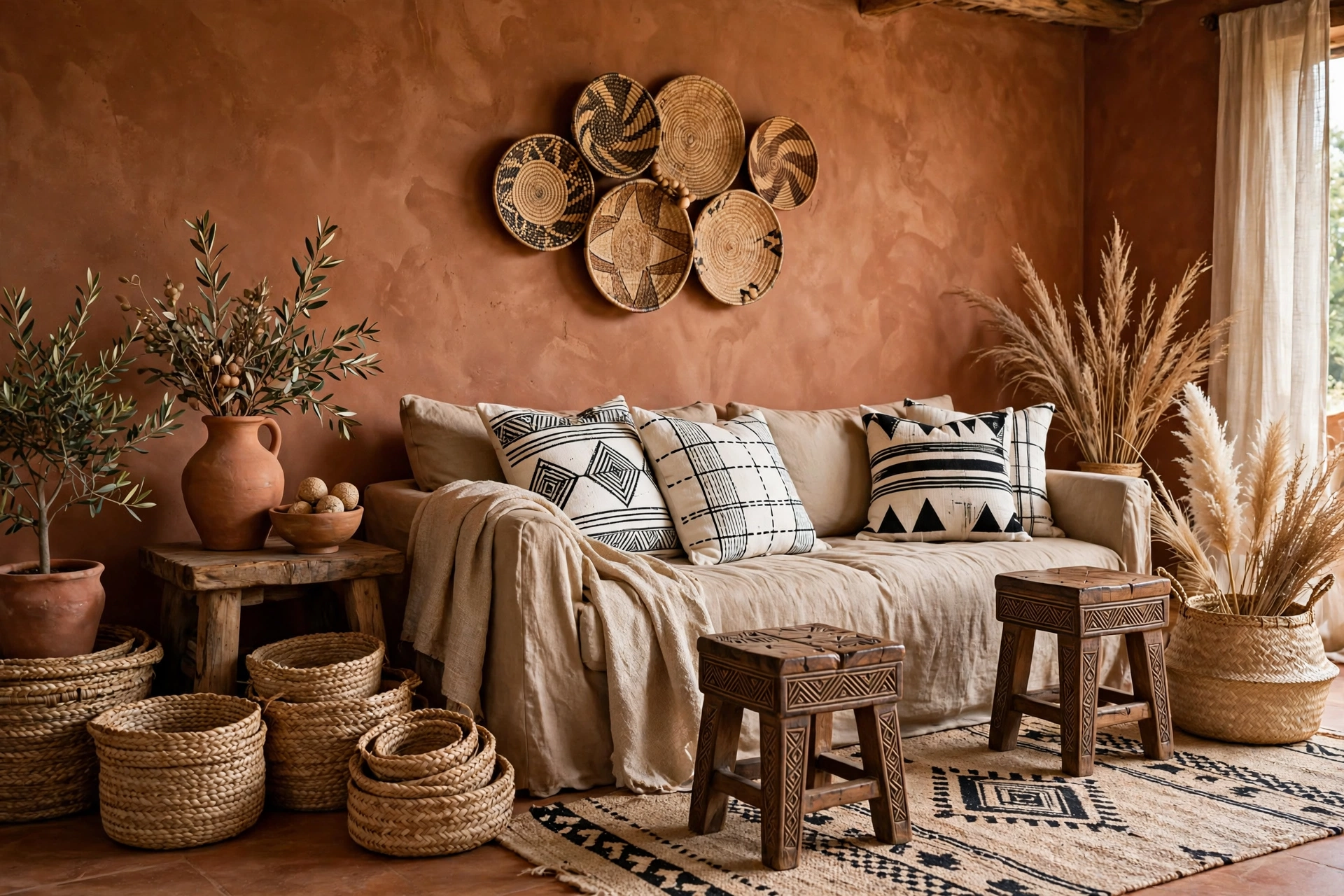
Textiles are the engine of this style. Mudcloth-style prints — traditionally inspired by Malian bogolan, with hand-drawn geometric symbols in black, white and ochre — bring instant graphic structure to cushions, throws and wall hangings. Kente-inspired stripes, drawn from the celebrated Ghanaian weaving tradition, add saturated bands of gold, green, red and black; use them in smaller doses, as a runner or a single statement cushion, because their intensity goes a long way.
Woven materials supply the texture layer. Seagrass and raffia baskets, woven pendant shades, jute rugs and carved-wood stools break up flat surfaces and keep the room tactile. Aim for at least three different natural textures per room. The table below summarises the core textile kit and where each piece works hardest.
| Textile or material | Signature look | Best placement | Dosage tip |
|---|---|---|---|
| Mudcloth-style print | Black, white and ochre geometric symbols | Cushions, throws, wall hangings | Your main pattern; repeat it 2–3 times per room |
| Kente-inspired stripes | Bold bands of gold, green, red and black | Table runners, one statement cushion | Small doses only; it is the loudest voice |
| Woven baskets (seagrass, raffia) | Natural fibre texture, often patterned | Planters, wall clusters, storage | Odd-numbered groups of three or five |
| Jute or sisal rug | Coarse neutral ground layer | Under seating or dining areas | Use as the base rug beneath patterned layers |
| Indigo-dyed cloth | Deep blue with resist-dyed motifs | Throws, bed runners, curtains | Your cool accent; pair with ochre for contrast |
| Carved wood objects | Dark, sculptural, handmade feel | Stools, masks as art, bowls | One sculptural piece per sightline |
How do you layer afrohemian decor without creating clutter?
You layer in a strict order: neutrals first, patterns second, objects last. Start with the neutral ground — walls, large furniture and the base rug in sand, cream or warm white. Add the textile layer next: cushions, throws and curtains carrying your mudcloth-style and indigo patterns. Finish with the object layer: baskets, carved pieces, plants and art. Each layer should be removable without the previous one collapsing.
The layering sequence, step by step
- Clear the room to its neutral base and check the palette balance.
- Lay the base rug, then place large furniture.
- Add patterned textiles to seating, largest pieces first.
- Hang one textile or artwork as the focal point.
- Cluster baskets and objects in odd-numbered groups.
- Place plants to soften edges and fill vertical gaps.
- Step back, photograph the room, and remove one item — restraint is the final layer.
Notice what this order prevents: the scattered buying of pretty objects with nowhere to land. If you browse broader style roundups for inspiration, such as our guide to interior design examples and why these styles trend, filter every idea through your palette and layer order before it enters the room.
How do you apply afrohemian decor room by room?
You apply it by repeating the same two or three motifs — one pattern, one accent colour, one texture — in every room, while letting each space emphasise a different layer. Repetition is what makes a whole home feel intentional instead of a series of experiments.
Living room
Lead with textiles: a neutral sofa dressed with mudcloth-style cushions, an indigo throw, and a jute rug layered under a patterned one. Add a basket wall or a cluster of planters in one corner, and let a single carved stool or side table provide the sculptural note. Keep walls warm white or clay-toned so the textiles stay the loudest element.
Bedroom
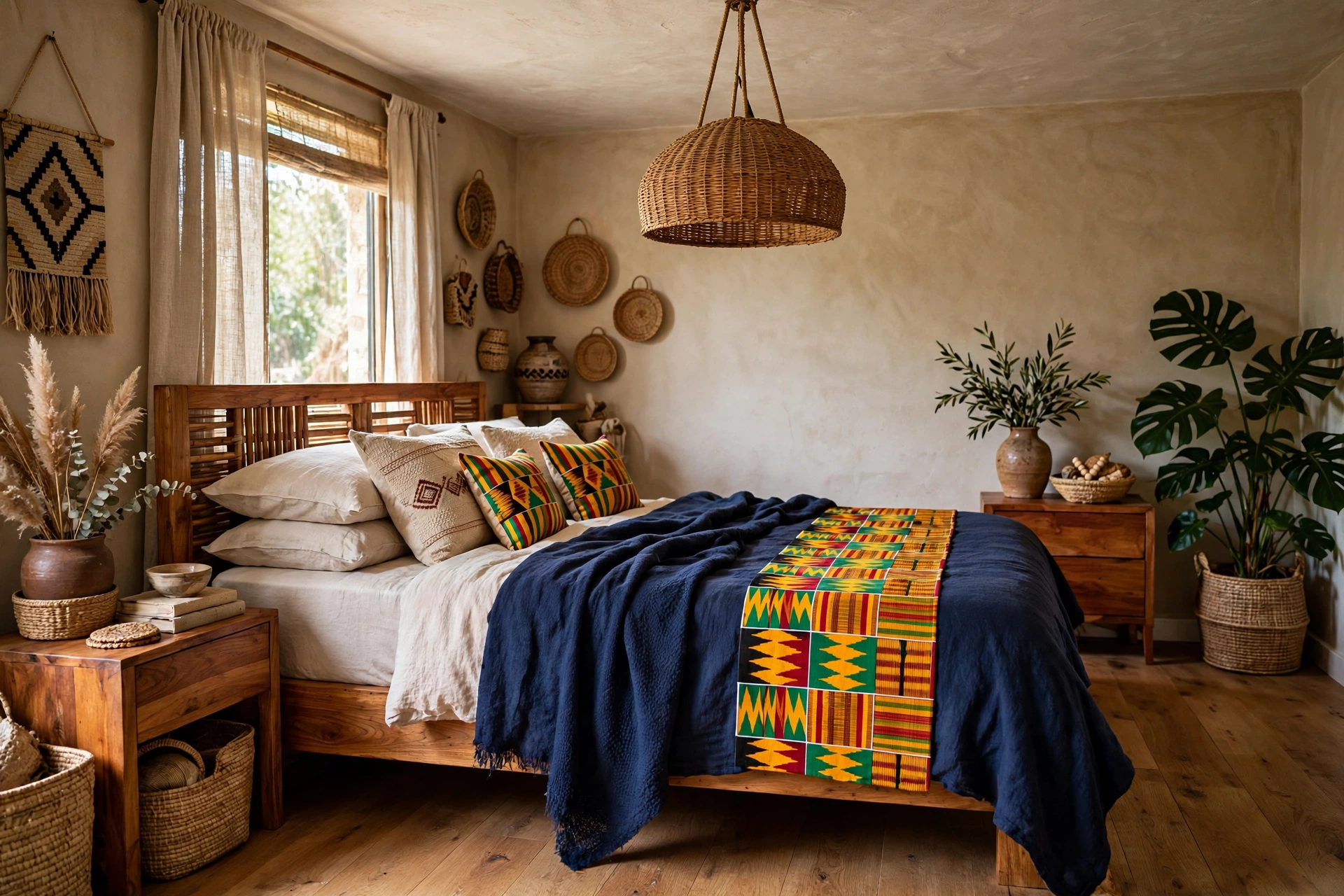
Shift the emphasis to calm. Use the stripe or print on a bed runner and two cushions only, and let bedding stay cream or sand. A woven pendant shade and a pair of baskets for storage carry the texture without raising the visual volume. Indigo works beautifully here as the single cool accent against warm bedding.
Dining area and small corners
A kente-inspired runner down a wooden table, woven placemats and a cluster of baskets on the wall gives you the full effect in one square metre. For a reading corner, combine one patterned cushion, a floor basket for blankets and a small carved side table. Small spaces prove the rule: motif repetition, not quantity, creates the style.
How do you source afrohemian pieces respectfully?
You source respectfully by treating the style as living craft traditions, not a costume. Many of the patterns carry meaning: kente patterns historically encode proverbs and status, and mudcloth symbols form a visual language. You do not need a degree to participate, but you should buy with awareness and credit the traditions you draw from.
- Prioritise pieces made by African artisans or fair-trade cooperatives when your budget allows.
- Read the product story; sellers who name the maker, region and technique are usually the real thing.
- Mix authentic handmade pieces with inspired-by prints rather than filling a room with imitations.
- Learn one fact about each major piece you own, so you can answer when guests ask.
- Avoid sacred or ceremonial objects sold as curios; choose everyday craft made for the market.
Marketplaces with strong artisan communities, such as Etsy, make it easy to filter for handmade work and message makers directly. A room built this way looks better, lasts longer and tells a truer story.
Common mistakes
The first mistake is buying pattern before palette. If you collect prints without fixing your earth-tone base first, every new piece fights the others. Lock the palette, then shop.
The second mistake is using kente-inspired stripes everywhere. Their saturation is a spice, not a staple; more than two striped elements in a room and the eye has nowhere to rest. The third mistake is skipping texture: a room with prints but no woven, carved or fibrous surfaces reads as flat decoration rather than a lived-in afrohemian space.
Finally, avoid the single-culture pile-up in one corner — a mask, a drum and a giraffe figurine clustered together turns respect into theme park. Distribute pieces through the room as you would any art you love.
Frequently asked questions
Is afrohemian decor the same as boho decor?
No. Bohemian style is the relaxed framework — layering, mixing, plants — while afrohemian decor specifies the visual content: African textiles, motifs, craft and an earth-and-indigo palette. Think of boho as the grammar and afrohemian as the vocabulary.
Can I use afrohemian decor in a small apartment?
Yes, and small spaces often wear it best. Work in one corner at a time, keep the palette tight, and use textiles rather than furniture to carry the pattern. A single well-layered reading nook delivers the whole mood.
Which wall colour works best with afrohemian decor?
Warm whites, sand and soft clay shades are the safest grounds because they let textiles lead. If you want a deeper wall, choose terracotta or a muted ochre and keep textiles lighter to balance it.
How do I mix afrohemian pieces with furniture I already own?
Keep your existing large pieces if their colour sits inside the palette, then convert the room through cushions, throws, rugs and baskets. Replace or re-cover only the items whose colour actively clashes, such as cool grey upholstery.
Where should I spend money first?
Spend first on the textiles you touch daily — cushions, throws and the main rug — and on one genuinely handmade statement piece. Save on baskets and planters, which are inexpensive and easy to find second-hand.
Keep learning: afrohemian rooms pair beautifully with the season’s relaxed seating — see our guide to boneless couches and modular sofas for the low, layered shapes that suit this style, and our roundup of durable metal furniture brands for the frames that anchor it.
Conclusion
You now have the full method: fix an earth-tone palette with indigo and ochre accents, let mudcloth-style prints and woven textures carry the pattern, layer in a strict order, and repeat your motifs room by room. Source from real makers where you can, and your afrohemian decor will feel collected and respectful rather than copied. Start this week with one corner — a chair, a cushion set, a basket cluster — and photograph it before and after. Which room in your home will get the afrohemian treatment first?

 English
 العربية
 Français