

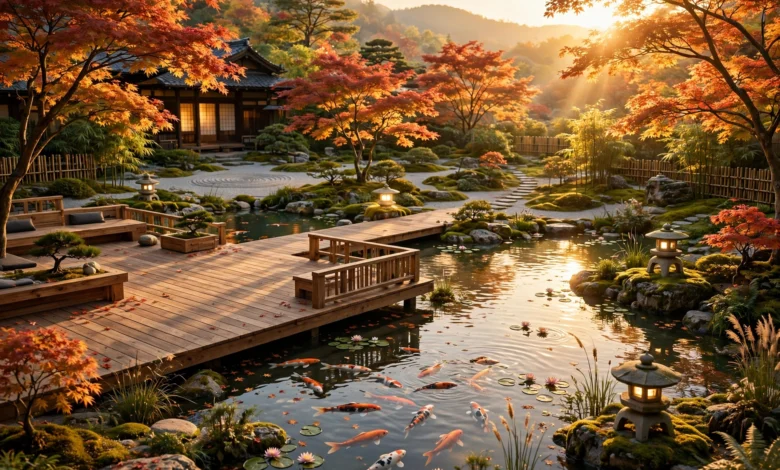
The exterior 3d models worth buying are the ones built like real places: believable vegetation, water that behaves like water, hardscaping with genuine construction logic, and materials tested under more than one kind of light. Demand for them is climbing — CGTrader’s 2026 marketplace data puts exterior category demand up about 10% year over year — because clients now plan gardens, patios and terraces as true extensions of the home and expect to see them visualised with the same care as the kitchen. This guide teaches you how to judge a scene pack before you buy it, and how professionals actually use one.
Key takeaways
- Exterior category demand is up about 10% year over year (CGTrader, 2026), driven by the indoor-outdoor living trend.
- Vegetation is the soul of an exterior scene and its most common failure point — check species variety and close-up detail.
- Water, hardscaping and ground detail separate a believable place from a stage set.
- Judge a pack under midday, golden-hour and dusk lighting; a pack that only works at noon is half a product.
- Before buying, verify format, renderer materials, polygon budget, real-world scale and the commercial licence.
- Professionals use packs as a foundation, then localise planting and materials to the project’s real climate.
Why are exterior 3D models in demand right now?
They are in demand because homes are now sold and planned on outdoor lifestyle, not floor plans alone. A shaded terrace, a planted courtyard or a pool edge at dusk carries emotional weight that a plan drawing cannot, so more visualisation briefs include the garden — usually with tight deadlines. Building every plant, stone and pergola beam from scratch is rarely an option, which is exactly where well-made exterior scene collections earn their price.
The pattern shows clearly in the garden niche, where demand concentrates on complete, themed outdoor environments rather than isolated objects. Our roundups of Japanese zen garden 3D models and rock waterfall 3D model packs demonstrate the range buyers look for. If you are shortlisting packs for your own garden project, browsing real patios and planting schemes on a platform such as Houzz first will sharpen your eye for what “believable” looks like.

What you need before you evaluate a pack
You need to know your own pipeline before a pack’s marketing can impress you. Settle these points first:
- Your renderer — because a scene’s materials are tuned for a specific engine and rarely transfer without work.
- Your scene size — a courtyard close-up and a full garden masterplan have very different polygon budgets.
- Your camera distances — whether viewers will see planting from across a lawn or at arm’s length.
- Your licence needs — especially whether the pack may be used in commercial client work.
What makes a good exterior scene pack?
A good pack is one whose weakest element still survives your closest camera. Judge it element by element, starting with the planting, because that is where most packs are exposed.
Vegetation that survives a close-up
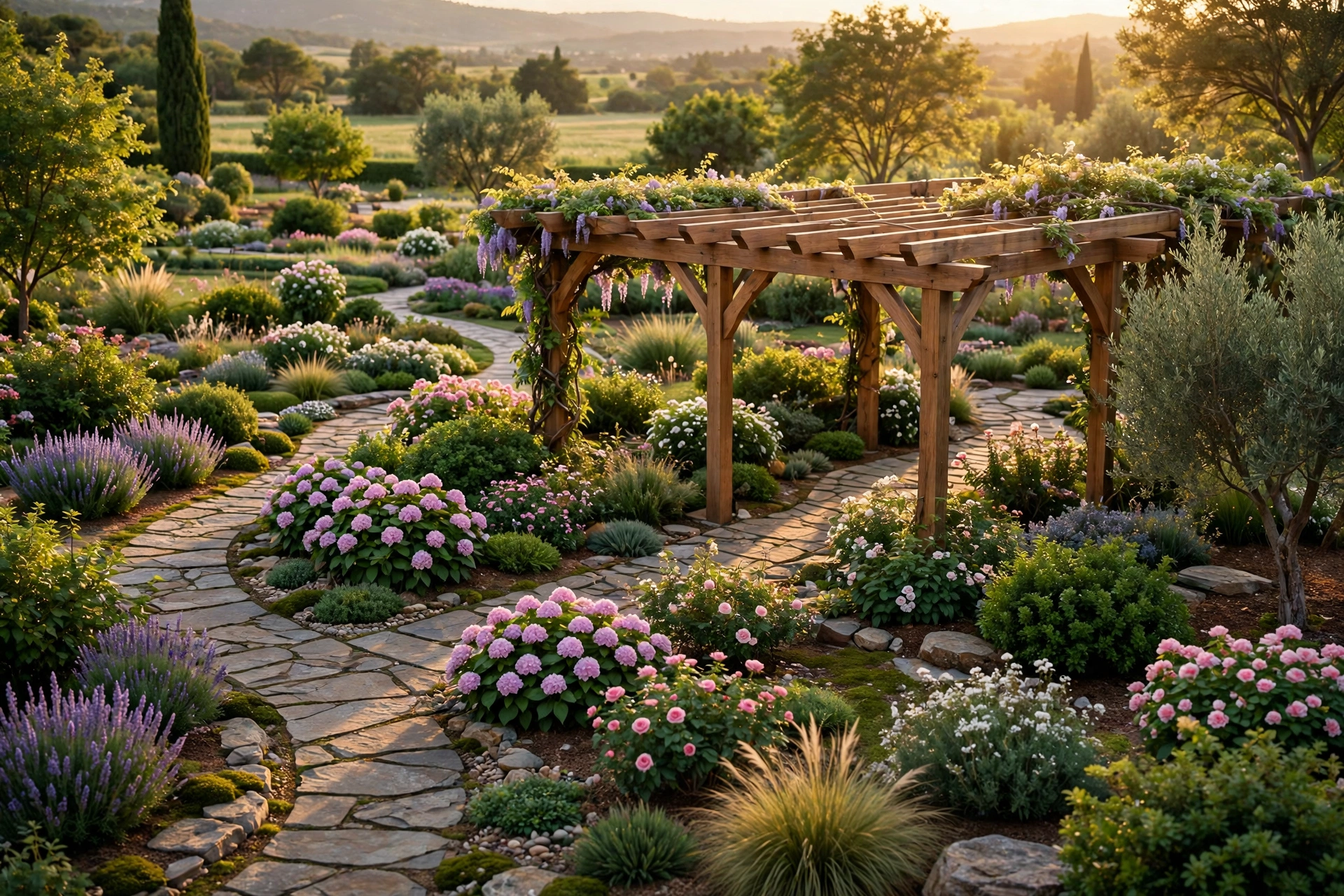
Plants are the soul of an exterior scene and its most common failure point. Look for species variety with believable leaf distribution, several growth variations of the same plant so repetition is not obvious, and textures that hold up when the camera moves closer than the hero shot. A pack with one perfect tree is a portrait; a pack with a planting system is a tool.
Water that behaves like water
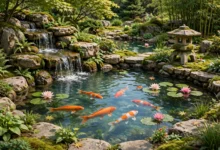
Ponds, streams and waterfalls sell serenity and expose weak assets instantly. Good packs treat water as a designed element — sensible flow over rocks, foam and edge detail where water meets stone, and materials with believable reflection and refraction for the target renderer. Still, flat mirror-planes with a blue tint are the mark of a pack to skip. Compare candidates against dedicated collections such as our guides to waterfall and koi pond 3D models and modern water fountain 3D models to calibrate what good water looks like.
Hardscaping with real construction logic
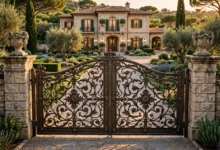
Decking, stone paths, retaining walls, pergolas and steps need correct proportions and plausible build details: board gaps, stone sizes a person could actually lift, posts that land where posts should. Designers notice these things even when clients cannot name them, and they are what make a scene read as a place rather than a stage set.
Ground, edges and what sits beyond the fence
Amateur exterior scenes often float: perfect planting on an endless, featureless lawn that ends at the edge of the render. Strong packs pay attention to the unglamorous connective tissue — soil and mulch under planting, grass that varies in height and colour, fallen leaves near trees, and believable transitions where paving meets soil. Many also include simple background elements or guidance for what appears beyond the boundary, because a garden photographed against a void convinces nobody.
Why does lighting decide whether a pack works?
Lighting decides it because outdoor scenes live and die by their light, and a pack tuned for one condition often falls apart in another. The best exterior packs are presented — and ideally tested — under more than one lighting condition. Use this table when you review a pack’s previews:
| Lighting condition | What it reveals | What to check |
|---|---|---|
| Midday sun | Material accuracy and texture quality | Leaves and stone read correctly without mood lighting to hide flaws |
| Golden hour | Warmth, shadow behaviour and atmosphere | Long shadows fall plausibly; water picks up believable reflections |
| Dusk with artificial light | Fixtures, emissive materials and evening mood | Garden lighting exists, works, and does not blow out the scene |
If a listing shows only one flattering sunset render, treat that as missing information. Ask for, or look for, views under flat midday light — that is where weak textures and lazy materials confess.
How do you check a pack before you buy it?
You check it by running the same practical audit you would apply to any professional asset, in a fixed order. Follow these steps:
- Confirm the native format matches your software pipeline.
- Verify the materials are built for your renderer, not another engine.
- Check the polygon budget against the size of scene you plan to build.
- Confirm the pack uses real-world scale throughout.
- Check whether high-count planting is instanced or proxied, so your scene stays responsive.
- Look for variation tools — scattered ground cover, alternative paving, seasonal options.
- Read the licence and confirm it covers commercial client work, if that is your use.
Steps two and three save the most pain. A single hero tree can be heavier than an entire interior scene, and discovering that after purchase — mid-deadline — is the classic exterior-pack regret.
How do designers actually use these packs?
In practice, exterior packs are rarely used untouched. A typical workflow starts with the pack as a foundation: keep the planting structure and hardscaping, swap key elements to match the client’s region and taste, adjust materials to the project’s palette, then art-direct the lighting for the story the image must tell — a quiet morning garden or a lively evening terrace. Packs also serve as rapid concept tools, letting you test three garden directions in an afternoon before committing to detailed modelling. Used this way, a good collection is not a shortcut around design; it is raw material that buys time for design where it matters most — composition, light and the client’s specific brief.
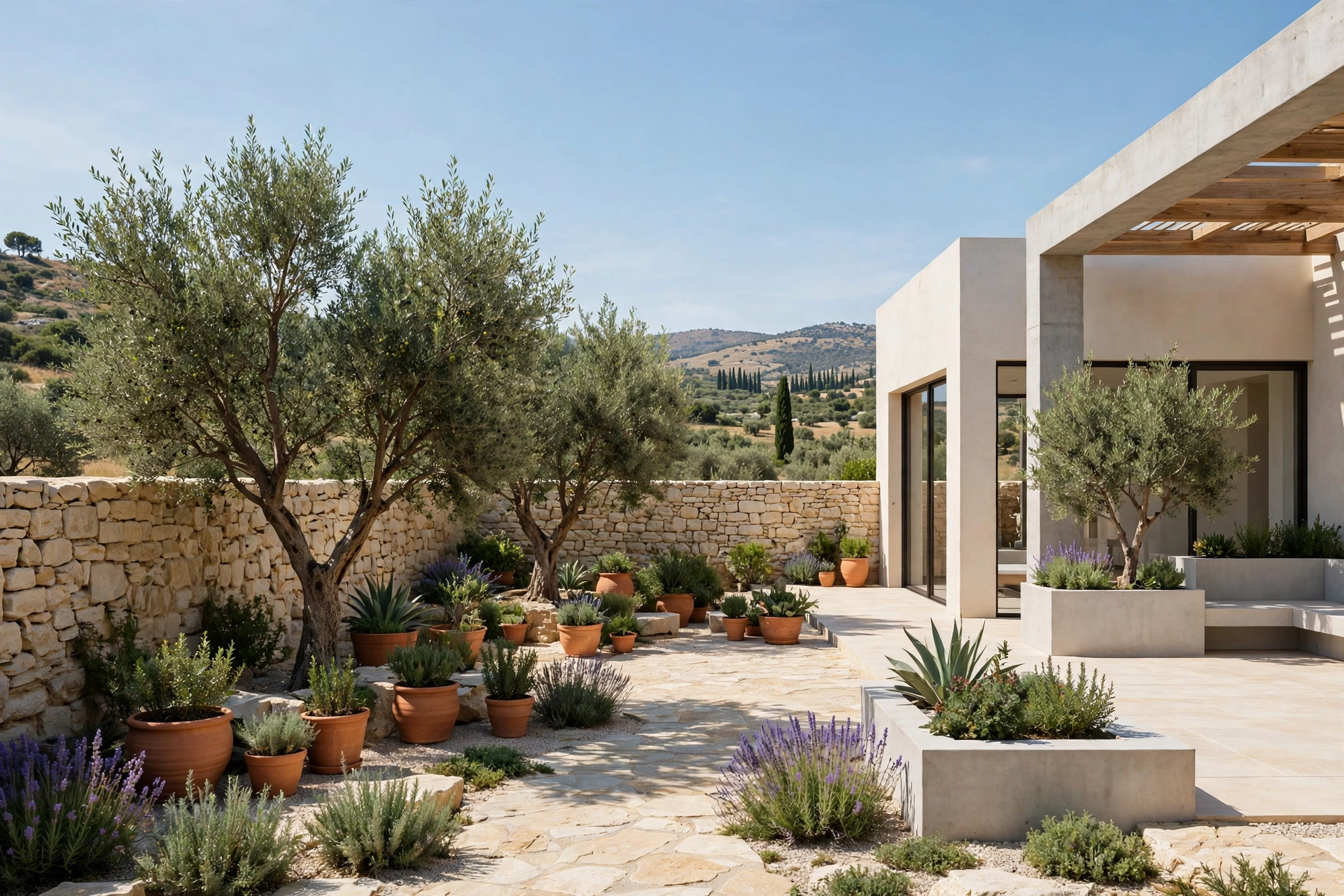
Regional honesty is the edit that matters most. Planting that thrives in a temperate render looks wrong in an arid courtyard brief, and clients increasingly notice. Swapping in species, materials and colours that belong to the project’s climate — stone that exists locally, planting the client could actually maintain — turns a generic pack into a design that feels commissioned rather than downloaded. Budget your time accordingly: the pack gives you the garden’s bones in an hour, but its local character is still your job.
Common mistakes
Judging by the hero render alone. One beautiful sunset image can hide weak textures, floating planting and noon-only materials. Demand detail views and flat-light renders.
Ignoring the polygon budget. Exterior scenes grow fast: hundreds of plants, each heavier than furniture. Check counts and instancing before the scene slows your machine to a crawl.
Buying for the wrong renderer. Materials tuned for one engine rarely drop into another without hours of rework. Confirm the target engine on the listing, not in the comments after purchase.
Using a pack untouched. Clients can smell a downloaded garden. Swap species, materials and layout details so the scene belongs to their project and climate.
Forgetting the ground. Perfect planting on a featureless lawn is the fastest tell of an amateur scene. Soil, mulch, varied grass and edge transitions are not optional detail.
Frequently asked questions
Are exterior scene packs worth it for small projects?
Usually yes, if the pack matches your renderer and climate. Even a single courtyard project can consume days of plant modelling, and a good pack returns that time for composition and lighting work.
How do I know if a pack will work with my renderer?
Check the listing for the native format and the engine the materials were built for. If it is not stated clearly, ask the seller before buying — conversion between engines is rarely a one-click job.
What matters more: plant variety or plant quality?
Quality at your camera distance matters first, then variety. A few believable species with growth variations beat a long species list of plants that collapse into blobs on close inspection.
Can I use one pack for several client projects?
Yes, provided the licence allows it — and you should vary it each time. Swap planting, paving and layout elements so repeat clients never see the same garden twice.
Why does my exterior render look fake even with good models?
Usually the light and the ground, not the models. Test your scene at midday and dusk, and invest in soil, mulch and edge detail — that connective tissue is what convinces the eye.
Conclusion
With exterior demand rising and outdoor living central to how homes are now imagined, a small library of high-quality exterior scenes is a sound investment for any visualisation practice. Judge packs by their vegetation, water, construction logic and lighting flexibility — not by the single prettiest render — and run the seven-step check before every purchase. Your next step: pick one pack you are considering and audit it against the lighting table above.
When you picture your ideal outdoor space, is it a calm planted garden, a social terrace, or something beside water — and which would you want to see visualised first?




 English
 العربية
 Français