

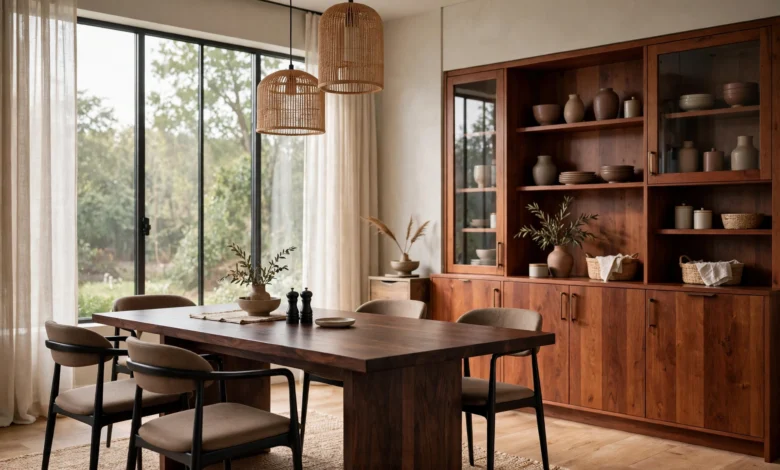
To specify timber for modern furniture, start with the two species that now define the warm end of the market: American black walnut for depth and cherry for glow. Houzz’s 2026 reporting puts warm, dark woods — walnut and cherry at the centre — firmly in place of the pale Scandinavian tones that dominated the last decade, and walnut furniture design in particular has become the reference point for premium modern pieces. This guide teaches you how each species behaves, how its colour changes over time, how to match species to furniture types, and which finishes keep the warmth instead of washing it out.
Key takeaways
- Walnut gives you chocolate-brown depth with minimal staining; cherry gives you a warm red-brown that deepens dramatically with light exposure.
- Cherry darkens fast in its first year, walnut lightens slightly — plan your finish and your expectations around that movement.
- Match species to duty: harder, steadier boards for tabletops and high-wear parts; expressive grain for doors, panels and casework.
- Clear, low-sheen finishes protect warm woods best; heavy stains flatten the grain you paid for.
- Buy boards from the same batch for one piece, because warm species vary more visibly than pale ones.
Why is walnut furniture design leading the warm-wood shift?
Warm woods are replacing pale tones because interiors have shifted toward comfort and visual weight. After years of white oak, ash and bleached finishes, designers and homeowners are choosing rooms that feel grounded and cocooning, and Houzz’s 2026 trend reporting places warm and dark woods at the centre of that shift. Walnut and cherry deliver instant depth without paint or stain, which suits the current preference for honest materials.
There is also a practical driver. Pale floors and pale furniture showed every scuff and demanded constant styling to avoid looking unfinished. Mid-to-dark timber hides wear, pairs with both warm metals and black accents, and photographs with the richness that social platforms reward. Understanding this context helps you specify with confidence: you are not chasing a fad, you are following a documented swing in taste.



What do you need before specifying timber?
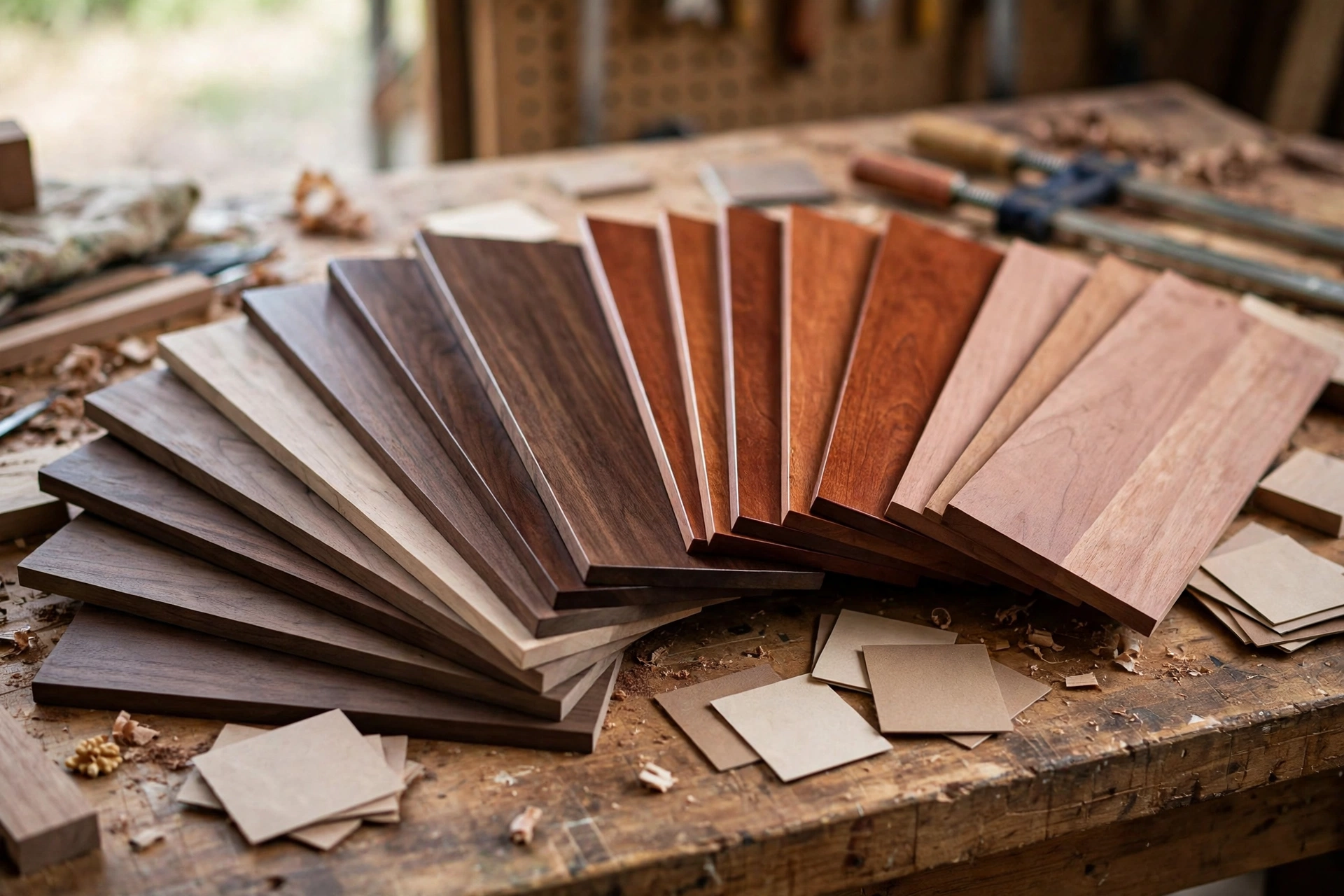
Before you order a single board, assemble four things. First, a sample set: offcuts of walnut and cherry, finished with your intended finish, because raw samples lie. Second, a light test: place those samples where the furniture will live for at least a few days. Third, a movement plan — how much colour change you accept in year one. Fourth, a batch strategy: enough board footage from one source to finish the piece without mid-project substitutions.
- Order finished samples, not raw ones, for every species on your shortlist.
- Label each sample with species, finish and date.
- Expose samples to the room’s real light and re-check them after a week.
- Write down the colour you see at week one, not day one — that is closer to the truth.
- Confirm your supplier can hold matching stock for the full project.
How do walnut and cherry actually differ?
Walnut and cherry differ most in colour behaviour. Fresh walnut heartwood runs from light brown to deep chocolate, often with purplish undertones and occasional creamy sapwood at the edges; over years it tends to lighten slightly and mellow. Cherry starts pale pinkish-brown and famously darkens with light exposure, reaching a rich red-brown that many people mistake for a stain. If you need the colour on delivery day to be the colour in five years, walnut is the steadier choice; if you enjoy watching timber mature, cherry rewards patience.
Workability and character in general terms
Both species are cabinetmaker favourites because they machine cleanly and take detail well. Walnut is moderately hard, stable and forgiving under tools, with grain that ranges from straight to dramatically figured. Cherry is somewhat softer and can burn under dull blades and blotch under stain, but it sands to an exceptionally smooth, glowing surface. In general terms, treat walnut as the reliable all-rounder and cherry as the species that demands sharp tools and gentle finishing.
The comparison table below pulls the specifying differences together.
| Property | American black walnut | American cherry |
|---|---|---|
| Fresh colour | Light brown to deep chocolate, sometimes purplish | Pale pinkish-brown |
| Colour change over time | Lightens slightly, mellows | Darkens strongly with light, to rich red-brown |
| Grain character | Straight to highly figured, open and bold | Fine, close grain with subtle shimmer |
| Hardness (general terms) | Moderate; good for most furniture duty | Moderate but softer than walnut; dents more easily |
| Workability | Machines and glues easily, very forgiving | Machines well; can burn and blotch, needs sharp tools |
| Best uses | Tabletops, casework, statement pieces | Casework, doors, drawers, refined smaller pieces |
| Finish behaviour | Excellent under clear finishes; rarely needs stain | Glows under clear finishes; stain with caution (blotching) |
How do you match species to furniture pieces?
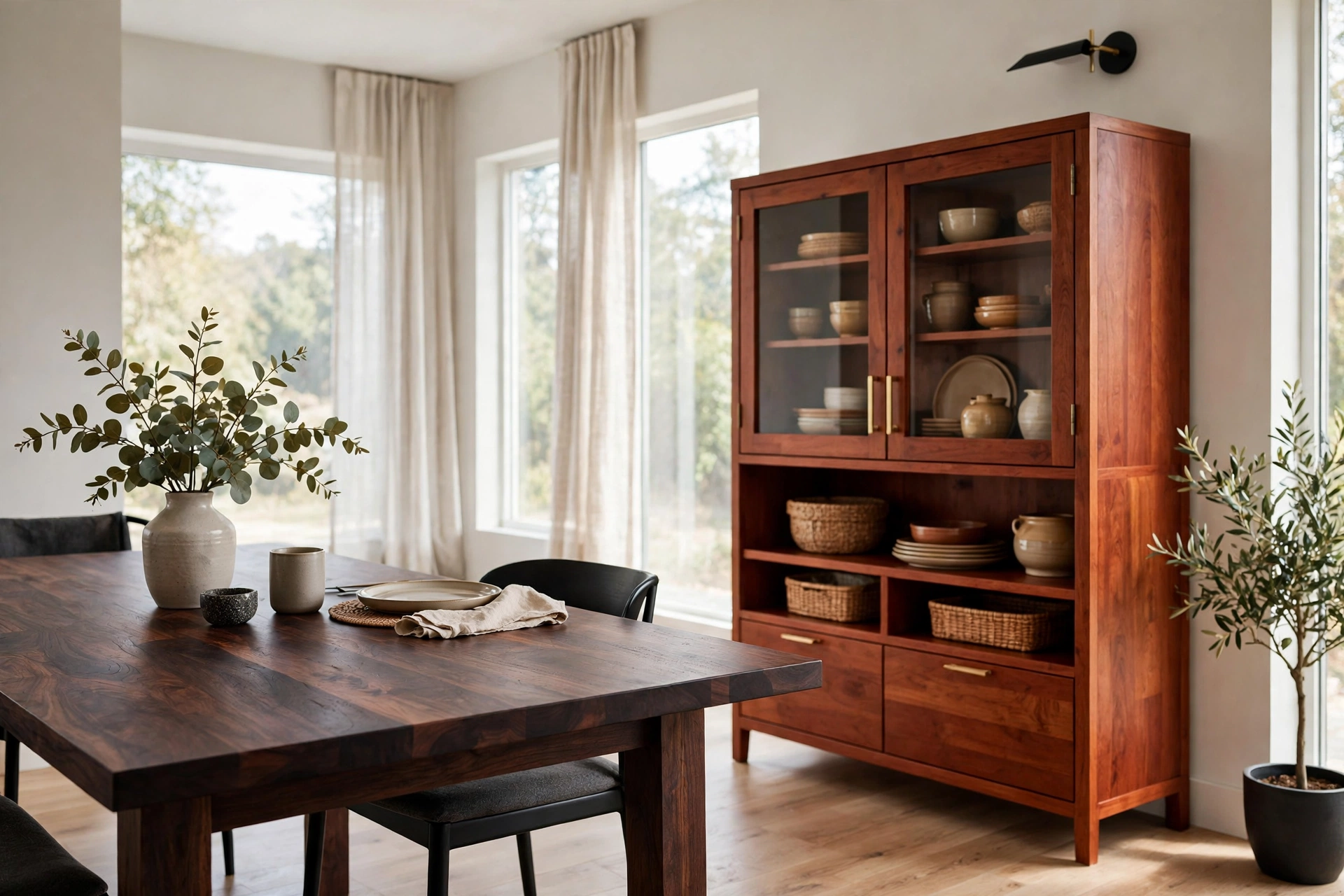
You match species to pieces by weighing wear, visibility and colour movement. For dining and desk tops that take daily abrasion, walnut’s combination of moderate hardness and forgiving grain hides life best. For cabinet doors, drawer fronts and bedroom casework — surfaces you see more than you strike — cherry’s fine grain and deepening colour deliver the richest long-term payoff.
A simple specifying sequence
- List every part of the piece and rate its wear: high, medium or low.
- Assign walnut to high-wear horizontal surfaces.
- Assign cherry to vertical and low-wear parts where its colour can mature evenly.
- Check that both species will sit in similar light; uneven exposure makes cherry patchy.
- Reserve your most figured boards for the most visible faces.
- Record the species, batch and finish for every part before cutting begins.
Mixing the two species in one room works beautifully when you keep finishes in the same sheen family and let one species dominate. If you want a contrasting accent instead of a second wood, look at how metal behaves against warm timber — our roundup of the top metal furniture brands for durable designs shows the blackened and brushed finishes that pair most naturally with walnut.
Which finishes keep warm wood warm?
Clear, low-sheen finishes keep warm wood warm. Hardwax oils and matte waterborne lacquers protect the surface while leaving the grain visually open and the colour close to its natural state. High-gloss and heavily tinted finishes do the opposite: gloss turns walnut into a showroom mirror, and dark stain flattens the figure that justified the timber’s cost in the first place.
Apply finish in thin, even coats and test on offcuts from the actual boards, because finish shifts colour more than species choice does. For cherry, consider a simple clear coat and patience rather than stain; the wood will do the darkening for you. For reliable technical data on any species you are considering — hardness figures, shrinkage and workability notes — check the reference entries at The Wood Database before you commit to a purchase.
How do you buy warm-wood boards wisely?
You buy wisely by inspecting for the three things that ruin warm-wood projects: sapwood streaks in walnut, mineral streaks and gum pockets in cherry, and boards milled from different logs pretending to be a set. Sapwood — the pale outer wood of the walnut log — appears as cream stripes that no finish can fully disguise, so agree with your supplier whether sapwood is acceptable on unseen faces only. Cherry’s gum pockets show as small dark streaks; a few are character, many are a distraction on a show face.
Sort your boards before you cut anything. Lay the full batch out in the light the piece will live in, arrange faces by colour and figure, and mark each board’s role with chalk. This ten-minute ritual, done before the first cut, is what separates furniture that looks calmly unified from furniture that looks patched. Keep offcuts from the same batch for repairs — with species whose colour travels over time, a stored offcut ages closer to the piece than any board you buy later.
Common mistakes
The most common mistake is judging cherry by its delivery-day colour. Clients who fall for the pale fresh boards panic as drawer fronts darken unevenly behind handles and ornaments. Warn everyone in writing: cherry is a time-lapse species, and covered areas will lag behind exposed ones for the first year.
Second, mixing batches. Warm species vary noticeably between trees and regions, so a mid-project top-up board can clash visibly with the original stock. Buy with overage from one batch. Third, staining walnut dark to “make it richer” — you erase the natural contrast between heartwood and grain that makes walnut read as premium.
Finally, placing cherry pieces half in sun and half in shade. Uneven light writes uneven colour into the surface, and no finish can fully prevent it. Rotate pieces or manage the light.
Frequently asked questions
Does walnut furniture go out of style quickly?
No. Walnut cycles in and out of trend headlines, but it has been a premium furniture timber for centuries and suits both modern and traditional forms. Its current prominence in 2026 reporting reflects a broader warm-wood swing rather than a single-season fad.
How long does cherry take to darken?
Most of the change happens in the first six to twelve months of light exposure, with slower deepening after that. Pieces in bright rooms change fastest. You can slow the process with UV-protective finishes, but you cannot stop it entirely.
Can I mix walnut and cherry in the same room?
Yes, if one species clearly dominates and both share a similar finish sheen. Use walnut for the largest pieces and cherry as the supporting act, and repeat each at least twice so the pairing looks deliberate.
Is walnut or cherry better for a dining table?
Walnut, in most cases. It is a little harder, hides wear in its bold grain, and its colour stays closer to what you approved. Cherry makes a beautiful table too, but expect stronger colour change and more visible denting over time.
Should I stain cherry to match older cherry furniture?
Usually not. Stain on cherry risks blotching and blocks the natural darkening that will eventually bring new pieces closer to old ones on its own. A clear finish and patience produce the most convincing match.
Keep learning: warm timber is where curved work shines — our curved and arched furniture design guide covers bending these species, and our furniture cut list guide shows how to cost premium boards without waste.
Conclusion
You can now specify warm timber with confidence: walnut for depth, stability and high-wear surfaces; cherry for fine grain and a colour that matures into richness; clear matte finishes for both; and one batch per piece, always. Before your next project, build a finished sample board of both species and live with it for a week — that single habit prevents most warm-wood regrets. Which species is leading your next build: walnut’s chocolate depth or cherry’s slow glow?




 English
 العربية
 Français